Why Some Businesses Get All the Luck
Luck isn't random. It's a system. Here's how winning businesses manufacture their own luck.
Luck is not random. It's a system you can build. Whether on a personal or business level. Some founders might stumble into the right partnerships, meet the right investors, and pivot at exactly the right time. You hustle for years and get nowhere.
Why were they luckier than you? I don't think it's magic.
In contrast, it's completely manufactured. Most successful businesses have been lucky multiple times. This makes "luck" a strategy that anyone can leverage.
Jason Roberts defined "luck" as the positive accidents that will occur in your life. He highlighted the Luck Surface Area, which is directly proportional to the degree to which you do something that interests you, combined with the total number of people to whom this is effectively communicated.
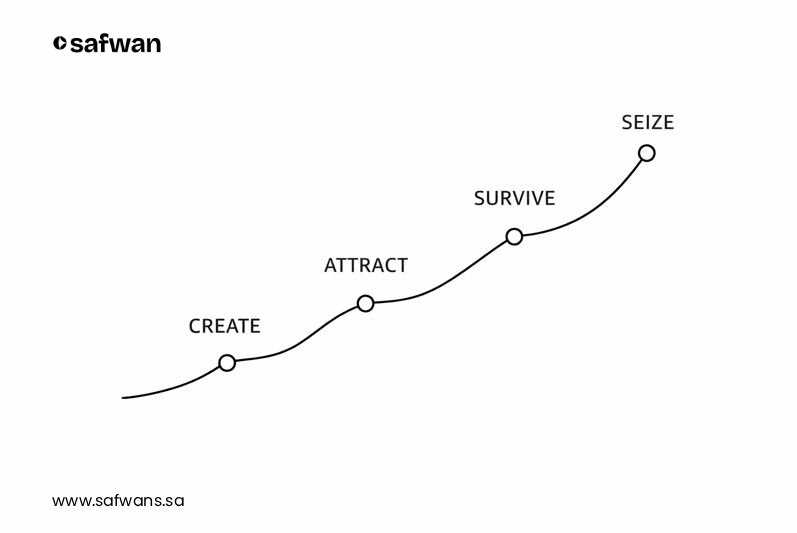
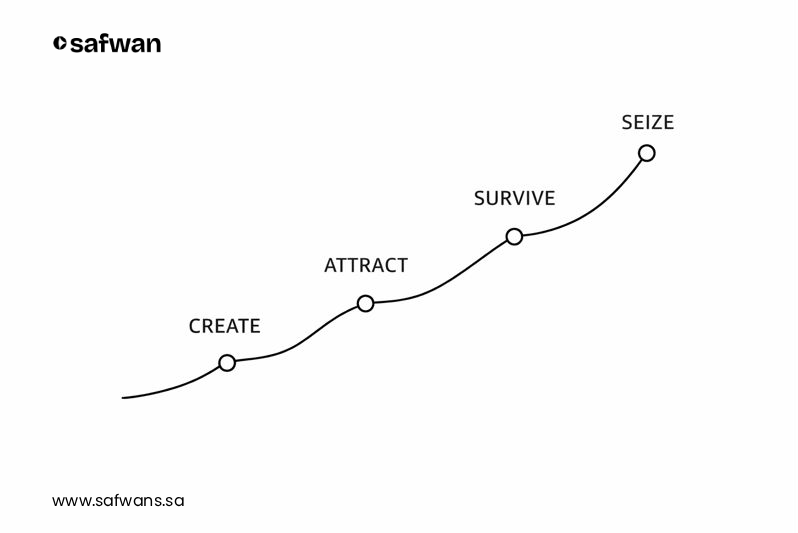
So let me show you four direct steps to build your "luck" system.
Play the Volume Game
Luck is a numbers game. The more shots you take, the more chances you create. This sounds basic because it is! Yet most founders don't leverage this. They make one product, pitch one investor, try one strategy, and wonder why nothing works their way.
"Lucky" people do the opposite. They maximize the probability of winning by running more experiments, launching more products and features, meeting more investors, and making more bets. If their chances of winning are small, they magnify them.
You see those 'lucky' founders because you only see their one successful trial. The other 100 failures are hidden somewhere.
Tech companies build multiple products that could solve different problems to maximize the probability of success. Look at Google, they don't just bet on search. They launch dozens of experimental products knowing most will fail, but one might become the next Gmail or Maps. Amazon does the same. AWS started as an internal experiment. Now it's their most profitable division.
Investors invest in multiple companies, knowing only 1% will find the product-market fit and make them exit with 10X. A VC fund might invest in 50 startups. 45 will fail, 4 will break even. But that one massive winner pays for everything else. They're not hoping to get lucky. They're engineering the probability.
Marketers maximize reach because more reach means more conversions. If 1% of people who see your ad convert, you need 100,000 views to get 1,000 customers. Want 10,000 customers? You need a million views. They don't hope for ads to go viral. They test 50 ad variations, analyze what works, and scale the winners.
More actions = more options. More options = more luck.
Do more, faster, and you'll create more moments where luck can find you. This takes us to the next step.
Invite Opportunity
It's not enough to create more chances. You need to make yourself visible so luck knows where to find you.
This means building in public, showing up at events, making noise about what you're building, creating content, and growing your network. The luckiest founders are the ones everyone knows about.
Think about it. Investors don't fund companies they've never heard of. Partners don't reach out to founders they can't find. Talent doesn't apply to companies with zero presence.
I rarely see Saudi founders build in public. Most stay quiet until they have something perfect. Meanwhile, founders in the US are tweeting their failures, sharing revenue numbers, and building an audience before they have a product.
Take Pieter Levels as an example. He built his startups by sharing every step on X. He shared revenue, posted code screenshots, and documented failures. By launch day, he had thousands of people already invested in his success. That's building in public.
Building a network around your business is another way to invite opportunities. At techrar, we leveraged our network of interested individuals who later became angel investors. We also made partnerships a core value. We partnered with logistics companies, cloud kitchens, and payment providers. All of which allowed us to penetrate the market faster and focus on our core technology as a subscription platform.
Your network consists of potential partners, future investors, and talent. Position yourself in a "scene" where others can easily spot your presence. And most importantly, don't burn bridges. Luck flows to those who are easy to find.
Stay in The Game
The true winners aren't always the ones with the best strategies or the fastest starts, they're the ones who endure, who stay in the ring long after others have tapped out.
Most businesses die before luck has a chance to show up. A friend once told me, "Business is an infinite game, where the primary objective is to continue playing".
You can do a lot of experiments and attract as many opportunities as you can, but if you run out of cash, burn out, or make fatal mistakes, none of it matters. Staying in the game long enough for luck to compound is half the battle.
Airbnb nearly died in 2008. The founders were drowning in debt with no investors and no revenue. To stay alive, they designed custom cereal boxes ("Obama O's" and "Cap'n McCain's") and sold them for $40 each during the presidential election. They made $30,000 from cereal boxes.
That hustle saved them. When they later pitched Y Combinator. Paul Graham was impressed by their hustle and offered them a spot specifically because of the cereal story. Airbnb didn't die. They stayed in the game long enough to build a $75 billion company.
This means staying flexible when circumstances change. Making fast decisions on reversible things. Taking risks strategically. Building anti-fragility into your business so one bad quarter doesn't kill you.
I wrote about 7 Symptoms You're Building a Zombie Startup, companies that look alive but are already dead. Don't become one while waiting for luck. Luck only finds you if you're still standing.
Persistence matters. But persistence without strategy is just stubbornness. Stay in the game smart, not just long.
Capture Opportunity
Once an opportunity reveals itself, you need to be ready to capture it. Being ready means being capable enough to seize it.
Most founders miss their "luck" because they aren't ready. They overthink and wait for the perfect time. They let the moment pass.
I've seen this happen firsthand. A potential partner approaches with a game-changing deal. Instead of moving fast, founders schedule three meetings to "think about it." By the time they're ready to say yes, the partner has moved on to a competitor who acted immediately.
Fast decisions on reversible things. Flexibility to pivot when the opportunity is real. A prepared mind that recognizes the break when it happens.
How do you prepare? Build ultimate teams, set impossible goals, and move with speed. I wrote about this in 3 Things Winning Businesses Do Differently.
Being prepared isn't about having perfect timing, it's about being the kind of business that can act when luck shows up. Luck doesn't wait. If you're not ready to act, someone else will.
Your luck won't change if you don't change yourself.
Build the system. Create more chances. Make yourself visible. Survive long enough. Act fast when the moment comes.
That's how you build a lucky business.
Subscribe below
For more on business and growth.